

Why early oral development in babies matters
What to expect in your baby’s oral development journey

0–6 weeks
Primitive ‘suck-swallow-breathe’ reflexes keep your baby safe and nourished. These survival responses lay the groundwork for later, more advanced oral functions.
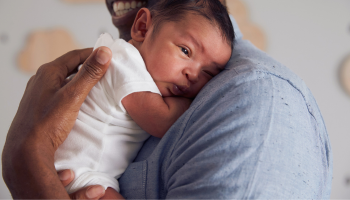
6+ weeks
By now, your baby is cooing, smiling, and bringing their hands to their mouth — a crucial step for oral development. Consider minimising pacifier use and introducing chew toys to help activate those tiny jaw muscles.
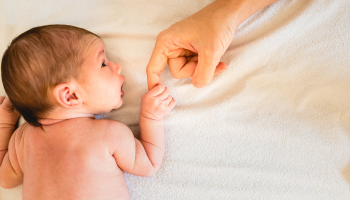
3+ months
The tongue starts poking through the lips as it develops strength and movement. Make sure your baby is getting plenty of tummy time to build neck strength and allow gravity to work on the forward growth of the jaw.

4+ months
Your baby explores different shapes, sizes and textures in their mouth, sending oral sensory information to the brain. Chew toys help activate the chew reflex before solids are introduced.
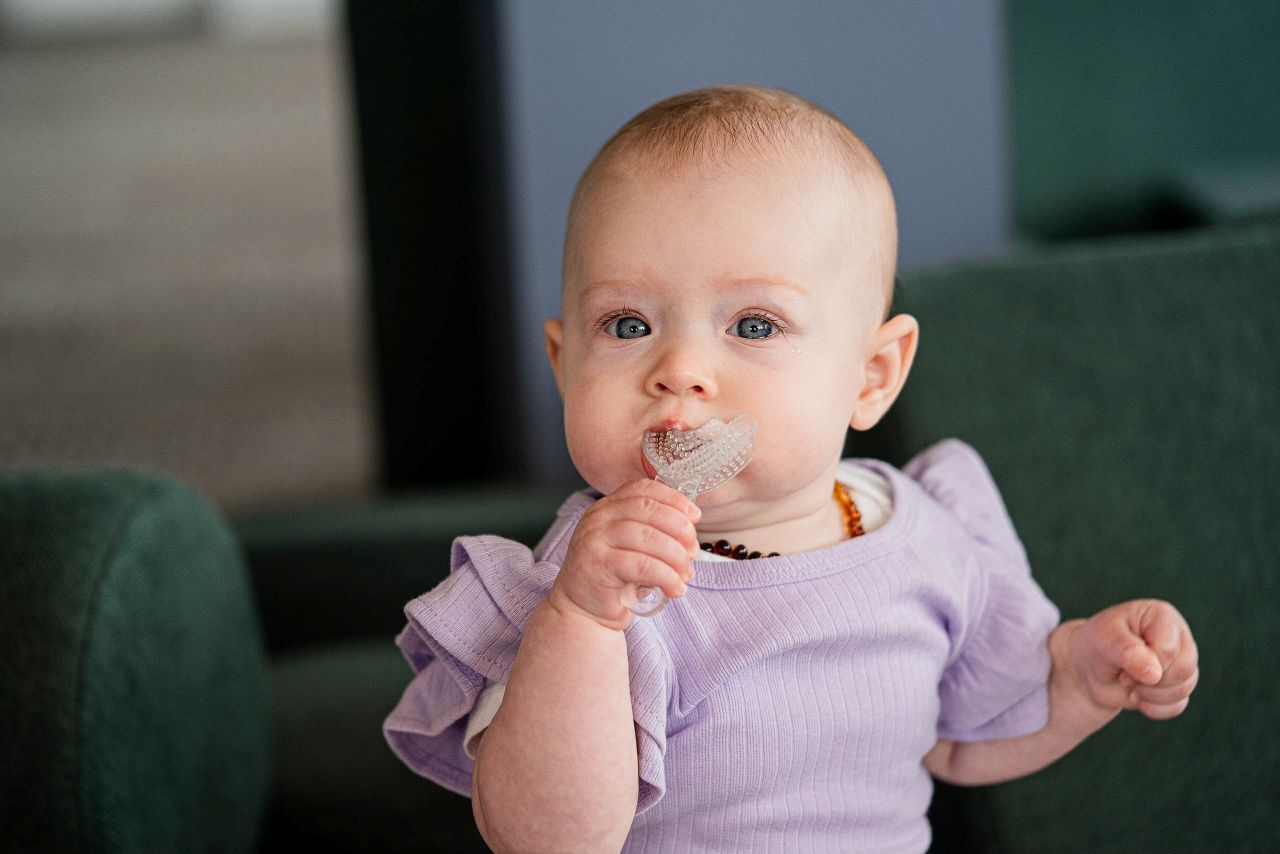
6+ months
Teething starts, the first teeth erupt, and your baby begins exploring solids. They’re showing a lot more interest in watching you eat and will be keen to try this process themselves.
12–18 months
Your baby should be breathing through their nose and keeping their mouth closed while chewing. They will soon have their 2-year-old molars and be capable of more complex rotary chewing actions. We can now see how the jaws are coming together.
What to expect in your baby’s oral development journey
0–6 weeks
Primitive ‘suck-swallow-breathe’ reflexes keep your baby safe and nourished. These survival responses lay the groundwork for later, more advanced oral functions.
6+ weeks
By now, your baby is cooing, smiling, and bringing their hands to their mouth — a crucial step for oral development. Consider minimising pacifier use and introducing chew toys to help activate those tiny jaw muscles.
3+ months
The tongue starts poking through the lips as it develops strength and movement. Make sure your baby is getting plenty of tummy time to build neck strength and allow gravity to work on the forward growth of the jaw.
4+ months
Your baby explores different shapes, sizes and textures in their mouth, sending oral sensory information to the brain. Chew toys help activate the chew reflex before solids are introduced.
6+ months
Teething starts, the first teeth erupt, and your baby begins exploring solids. They’re showing a lot more interest in watching you eat and will be keen to try this process themselves.
12–18 months
Your baby should be breathing through their nose and keeping their mouth closed while chewing. They will soon have their 2-year-old molars and be capable of more complex rotary chewing actions. We can now see how the jaws are coming together.
Chewing is more than just a milestone for your baby. It's a vital piece of their early developmental journey

Jaw growth
Every chomp strengthens jaw muscles and stimulates bone growth.

Facial development
Proper chewing helps shape the face and supports nasal breathing.

Oral exploration
Chew toys teach your baby how to move their tongue and prepare for solids.
Myo Munchee BEBE
6-18 MONTHS
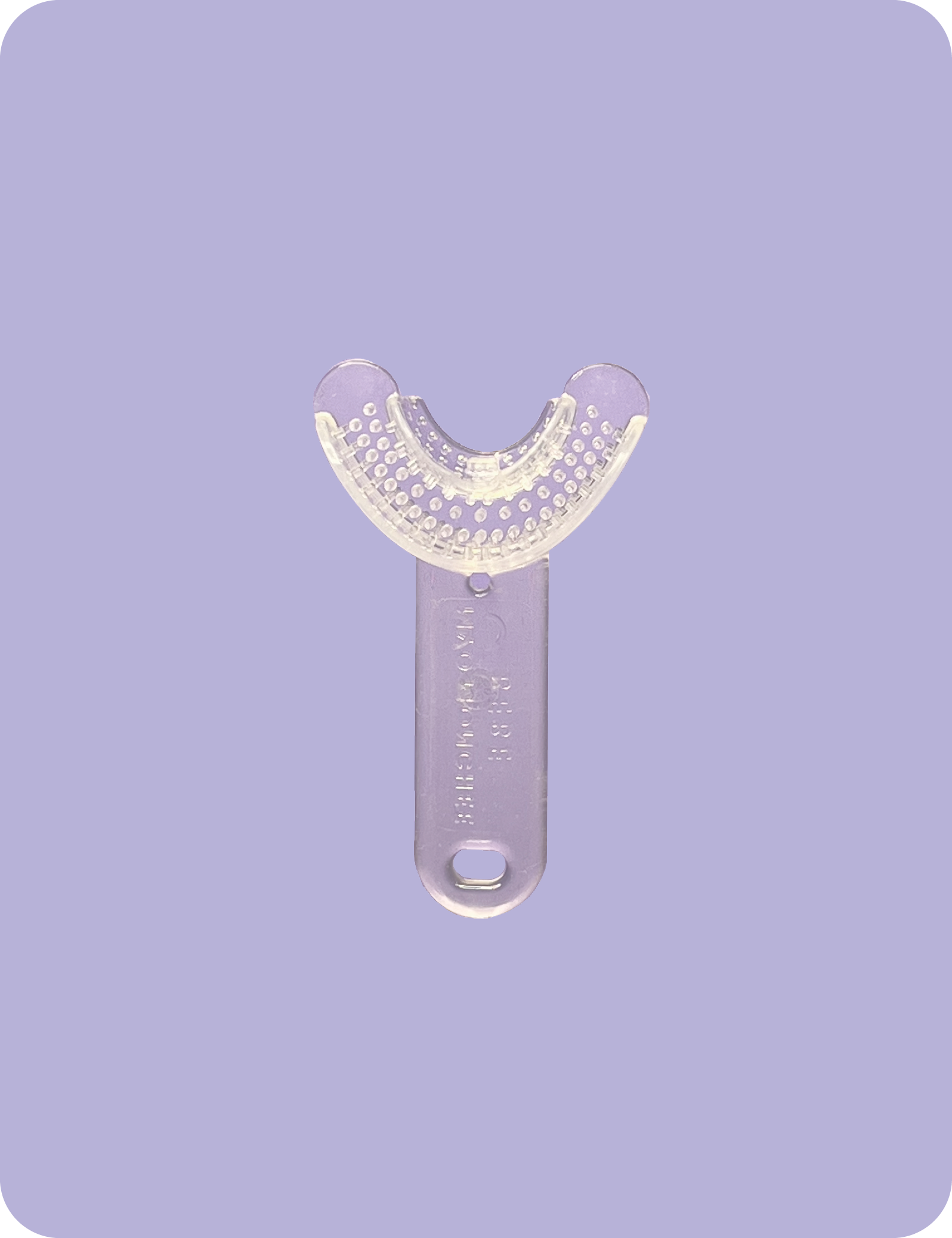
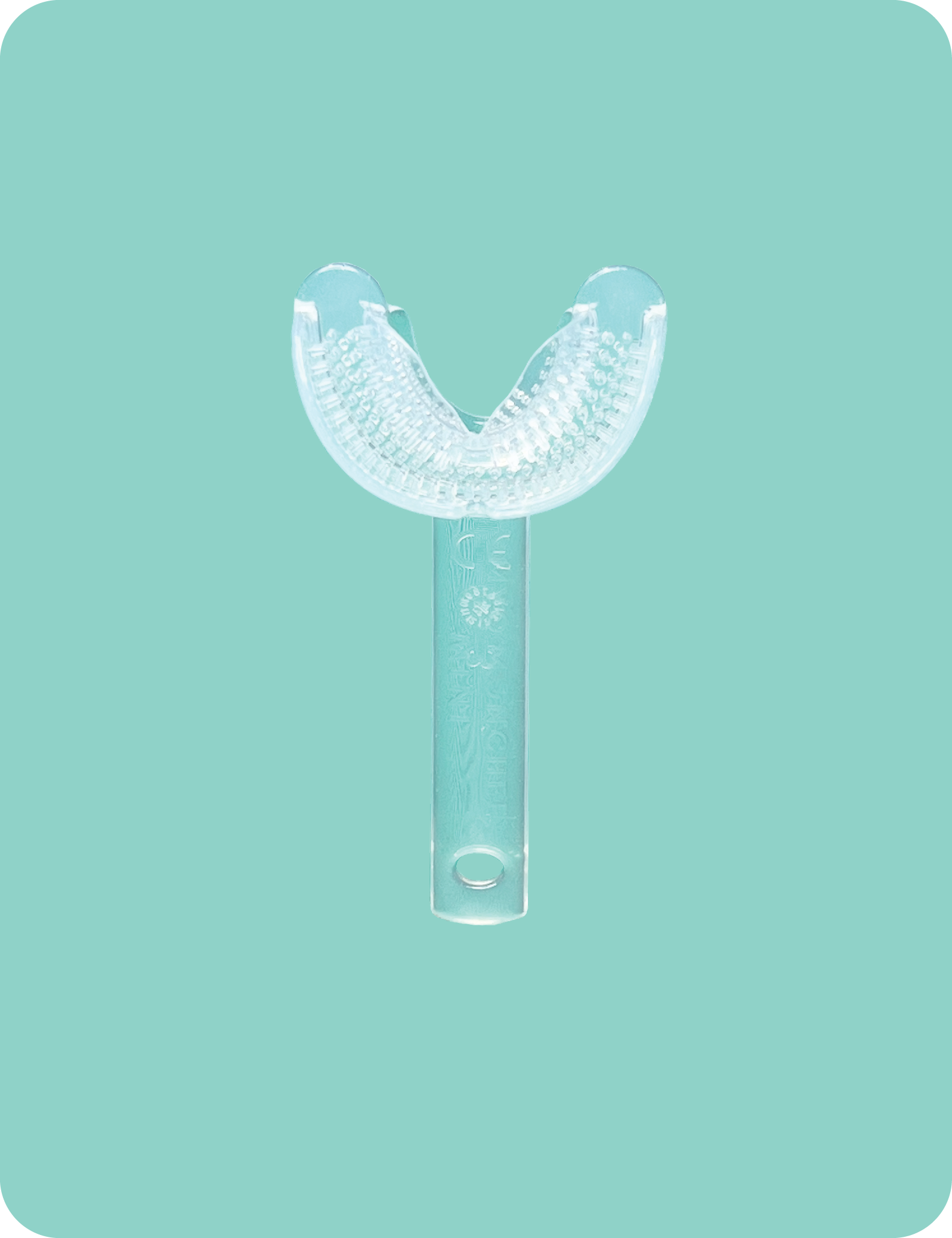
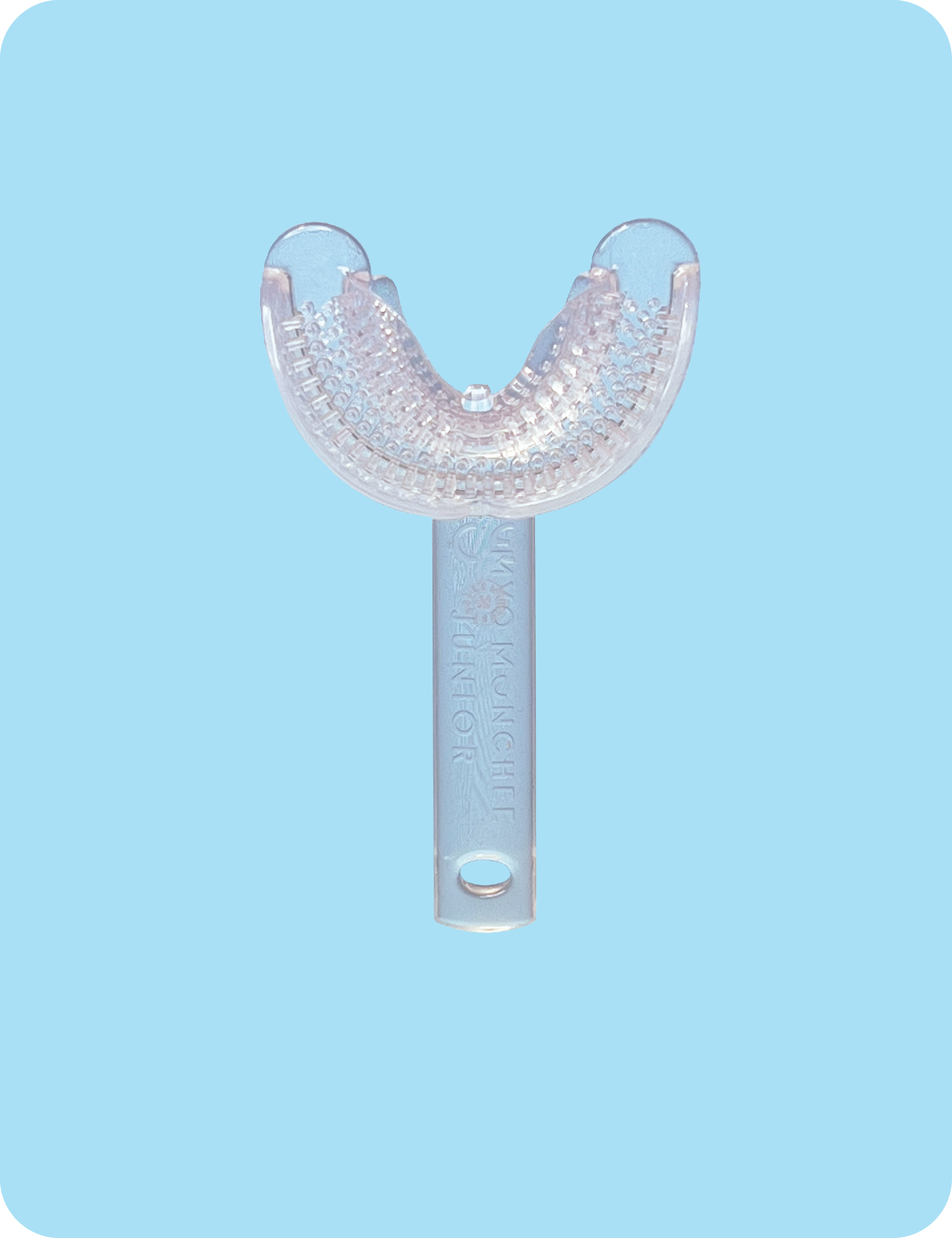
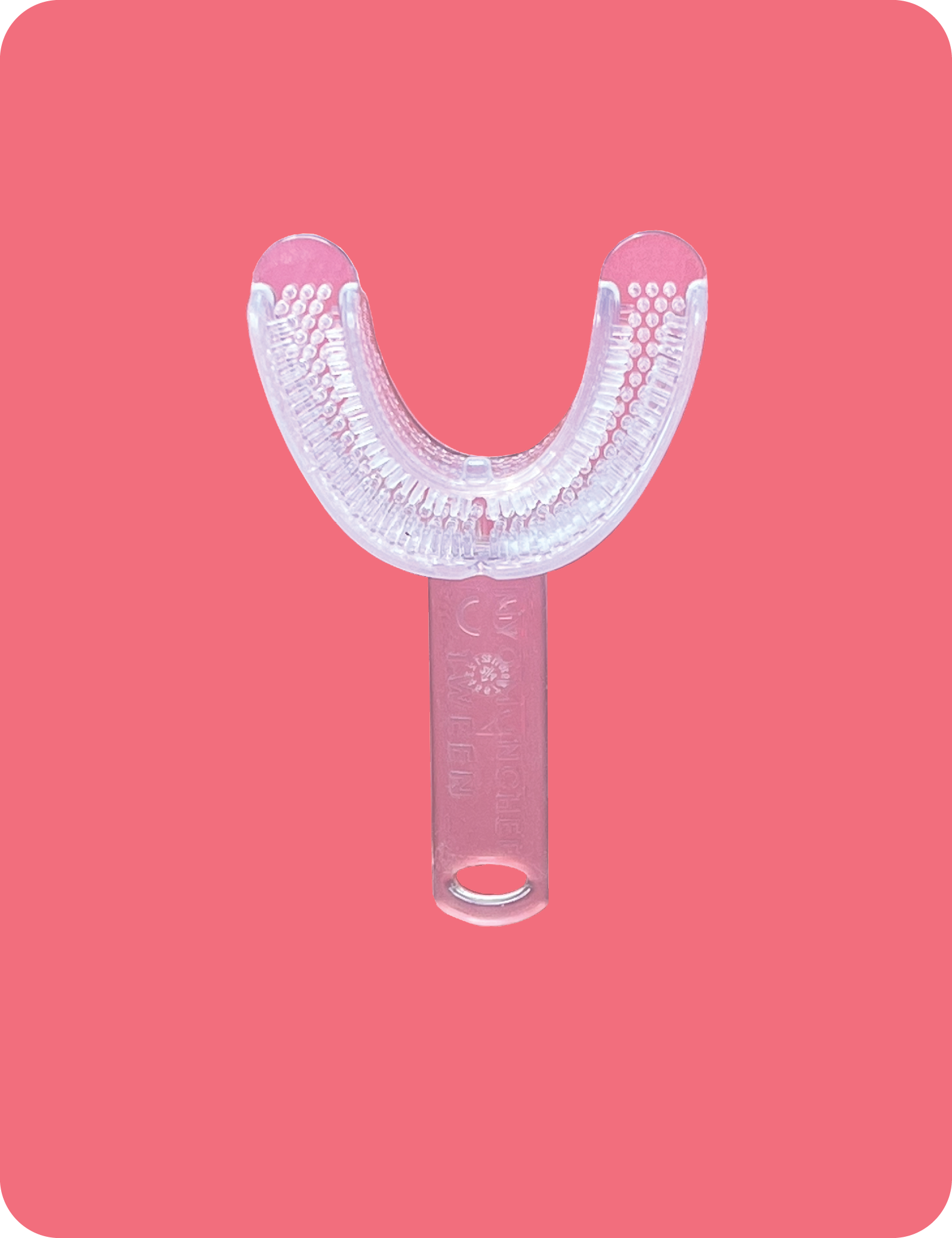
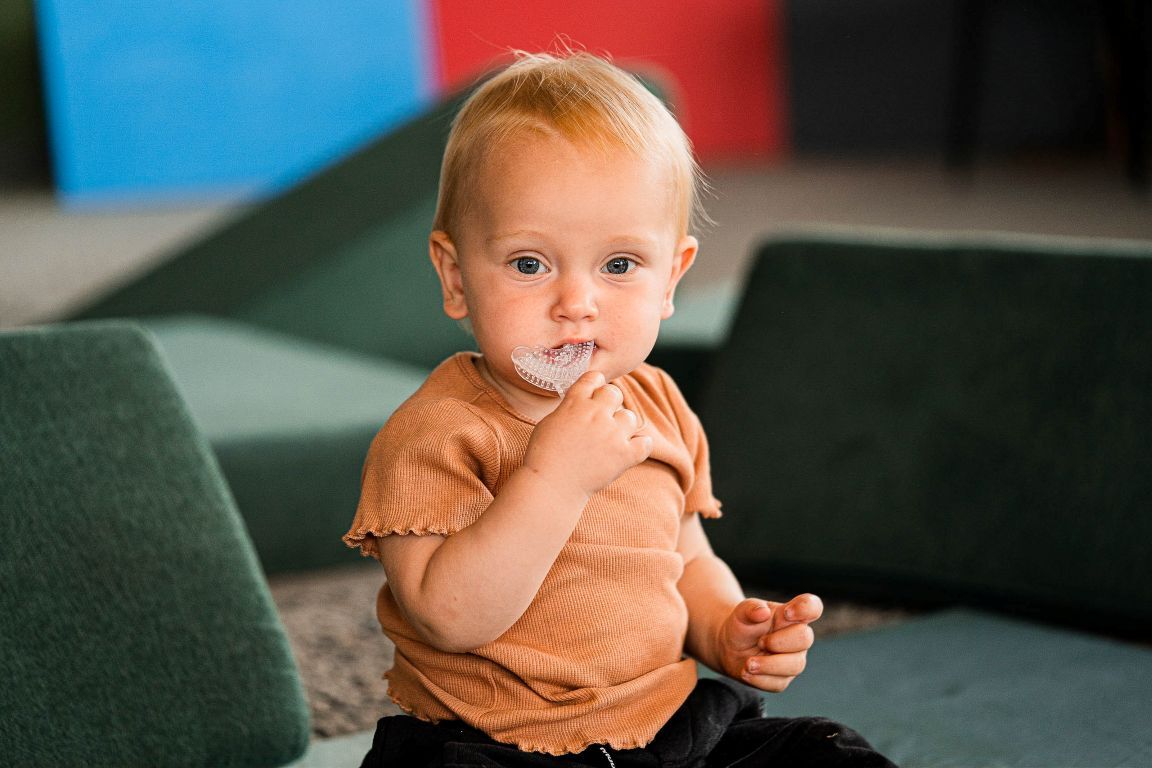
The Myo Munchee Bebe is a gentle, silicone chewing device designed specifically for babies aged 6–18 months. It’s the perfect tool to help keep your baby’s oral development on the right track.
The Myo Munchee Bebe is only available for purchase from a practitioner to ensure your baby gets the extra care they need in the early stages of their oral development.
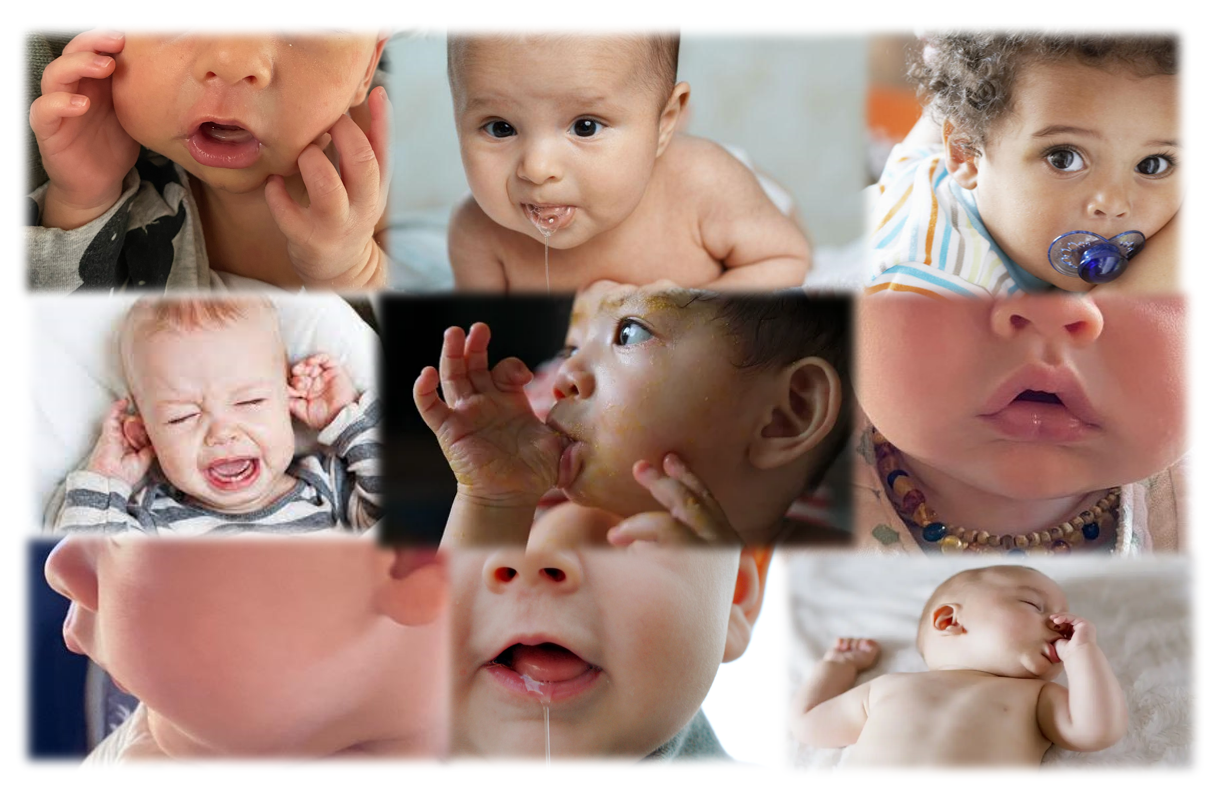
Signs of dysfunction in a baby’s oral development
Your child may need a little more support if you detect:
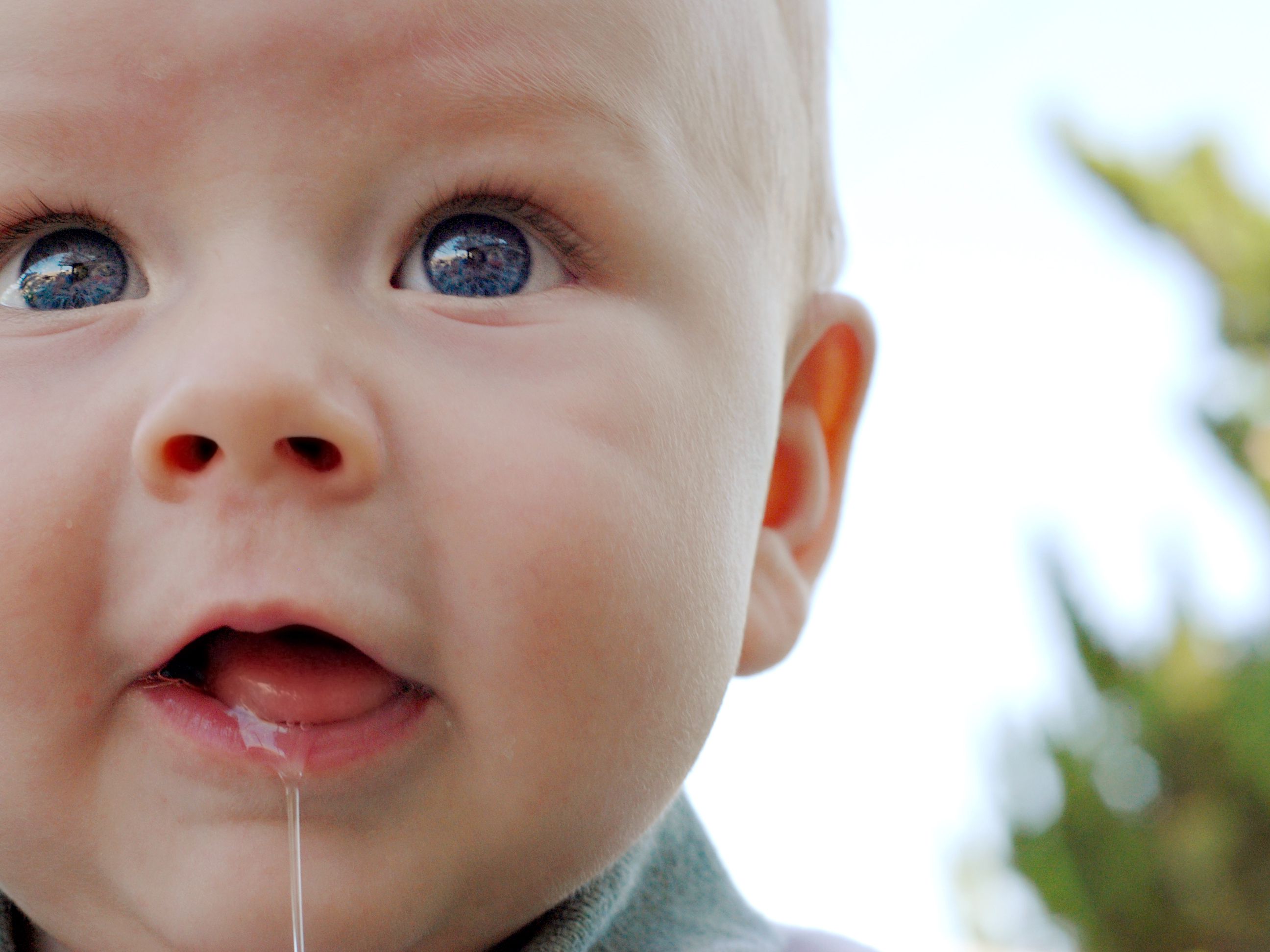
- - Excessive dribbling and drooling
- - Mouth breathing
- - Difficulty managing solids
- - Ear infections
- - Sinus congestion
- - Sleep disturbances
- - Continued pacifier or dummy use
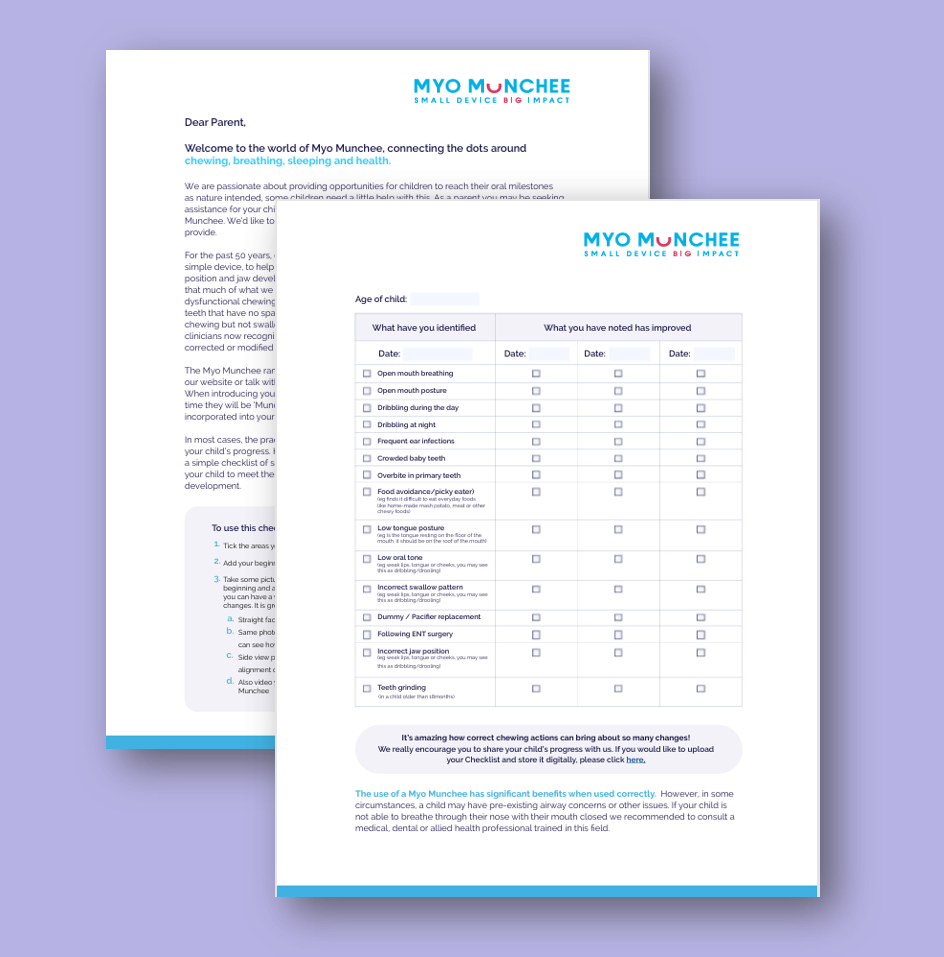
Track Progress with the Myo Munchee
Change isn’t always noticeable. That’s why we created this simple checklist to help you track your baby’s oral milestones with the Myo Munchee over 9 months.
Did you know?
Breastfeeding
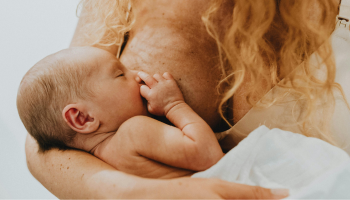
Breastfeeding isn’t just about nutrition. The act itself is a complex synchrony of nerve information that coordinates over 26 muscles, helping to grow the jaw and support facial symmetry.
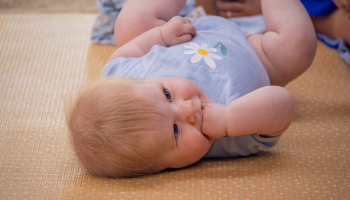
Gag reflex
At around 4 months old, your baby will often stick their fingers and toys far into the mouth until they gag. This is entirely normal, helping to develop the gag reflex that will stay with them for life.
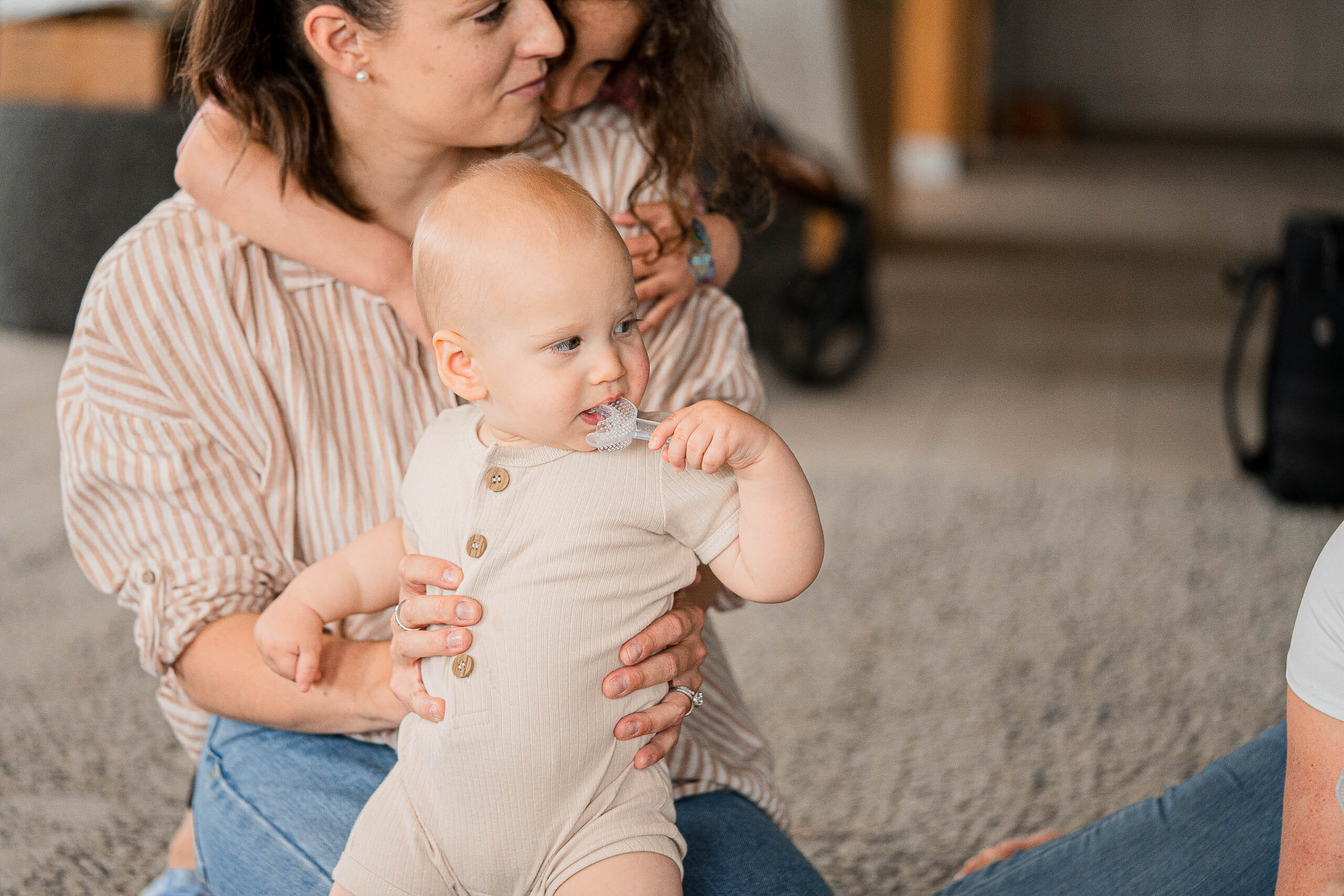
Understanding space
The mouth is where your baby first learns about three-dimensional space. Putting everything in their mouth gives them a lot of feedback about the size of things.
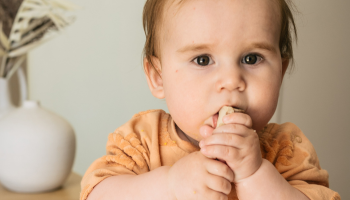
Sensory learning
One-third of all sensory information relayed to the brain comes from the mouth as there are a lot of sensors in the lips, face, and tongue.
Want to learn more?
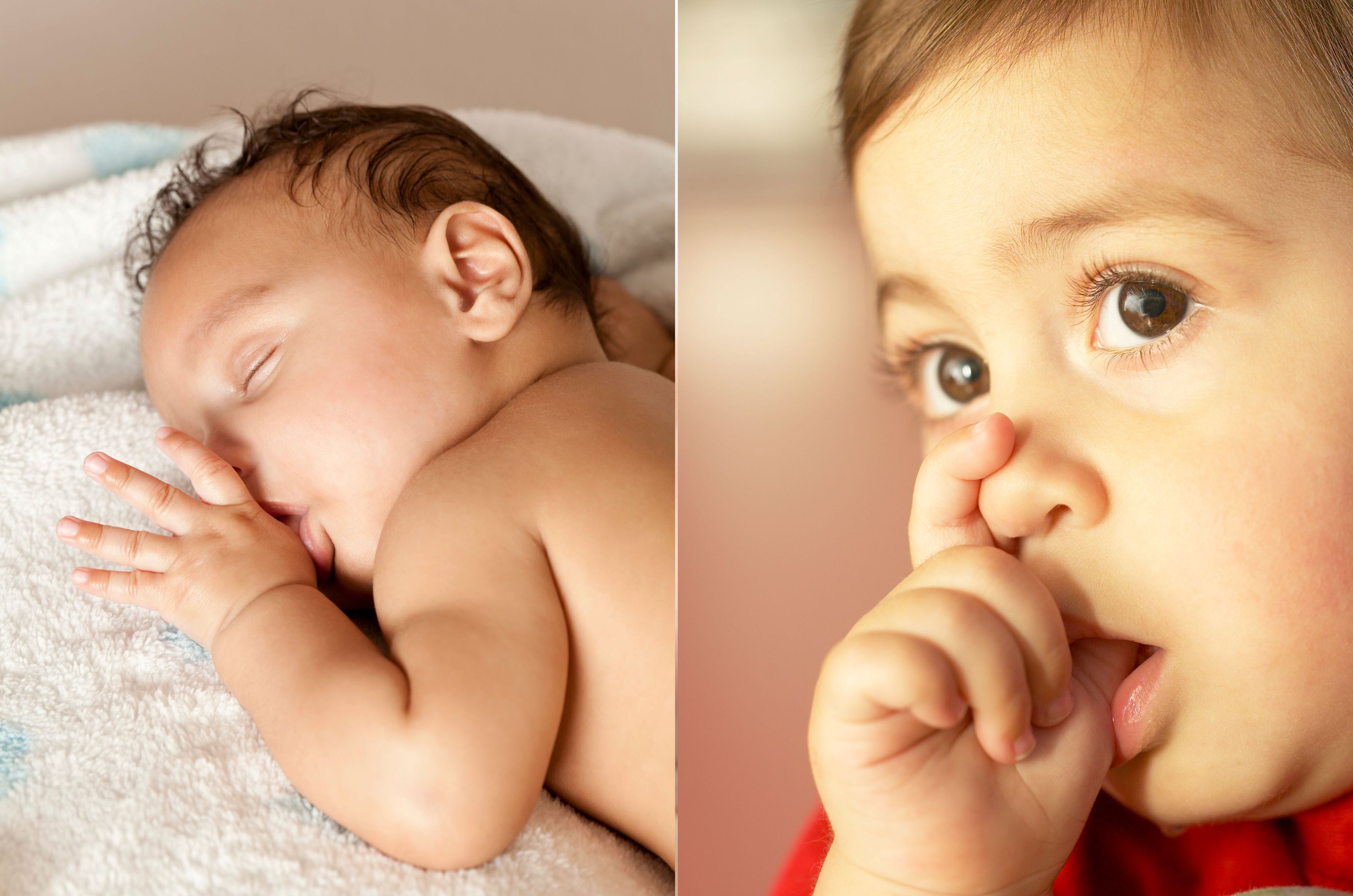

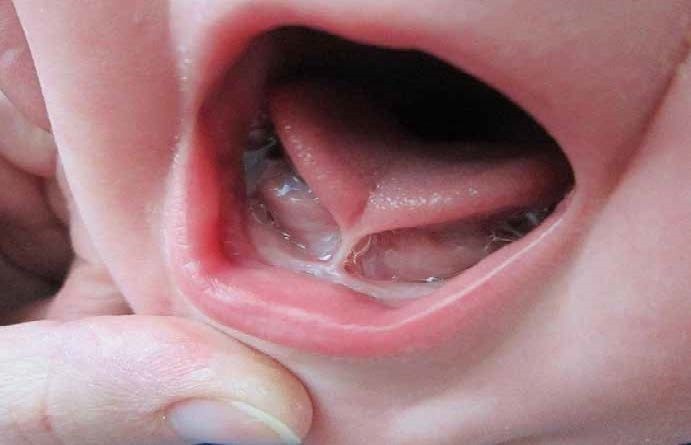
Ankyloglossia (Tongue Tie) and Oral Development | Myo Munchee
12 Feb, 2026 by Dr Lynda Dean-Duru
Read moreFAQs
With just 10 minutes of daily chewing exercise, children and adults can improve the tone and function of muscles of the lips, face, and jaws and ensure they’re working at their best
Chewing on a Myo Munchee encourages lip closure, correct resting tongue placement, and swallow pattern, helping to promote nasal breathing, bone integrity and improve teeth and gum health.
There are many things to think about when deciding on the right Myo Munchee for you or your child. Factors like age and stage of development will play a big part in the decision.
Each Myo Munchee is recommended for a specific distance between the pointy (canine) teeth and comes with a general age guideline. Please use the Sizing Guide to double-check sizes before purchasing.
If you’re still unsure, it may be best to check in with a practitioner to determine the best size Myo Munchee. Please take a look at our Practitioner Directory to find someone in your area.
Always rinse the Myo Munchee before use. It can be submerged in freshly boiled water for 60 seconds to sterilise. Just be sure it has cooled down before use!
Once clean, place the device in the mouth with the ‘lips’ indent at the top. Make sure the lips close around the Myo Munchee while chewing. This not only strengthens the muscles but also prevents excessive wear on the device.
Keep chewing evenly on both sides; chewing excessively or exclusively on one side may damage or weaken the Myo Munchee. Aim for 5 minutes of active chewing twice a day as an ideal protocol.
We find that the optimal routine for general oral health and to keep the muscles strong is to chew a Myo Munchee for 5 minutes twice a day.
It’s just like a toothbrush. After chewing, simply rinse with cold running water and dry thoroughly. Once dry, please store your Myo Munchee out of UV light, in a place that allows air circulation around the device.